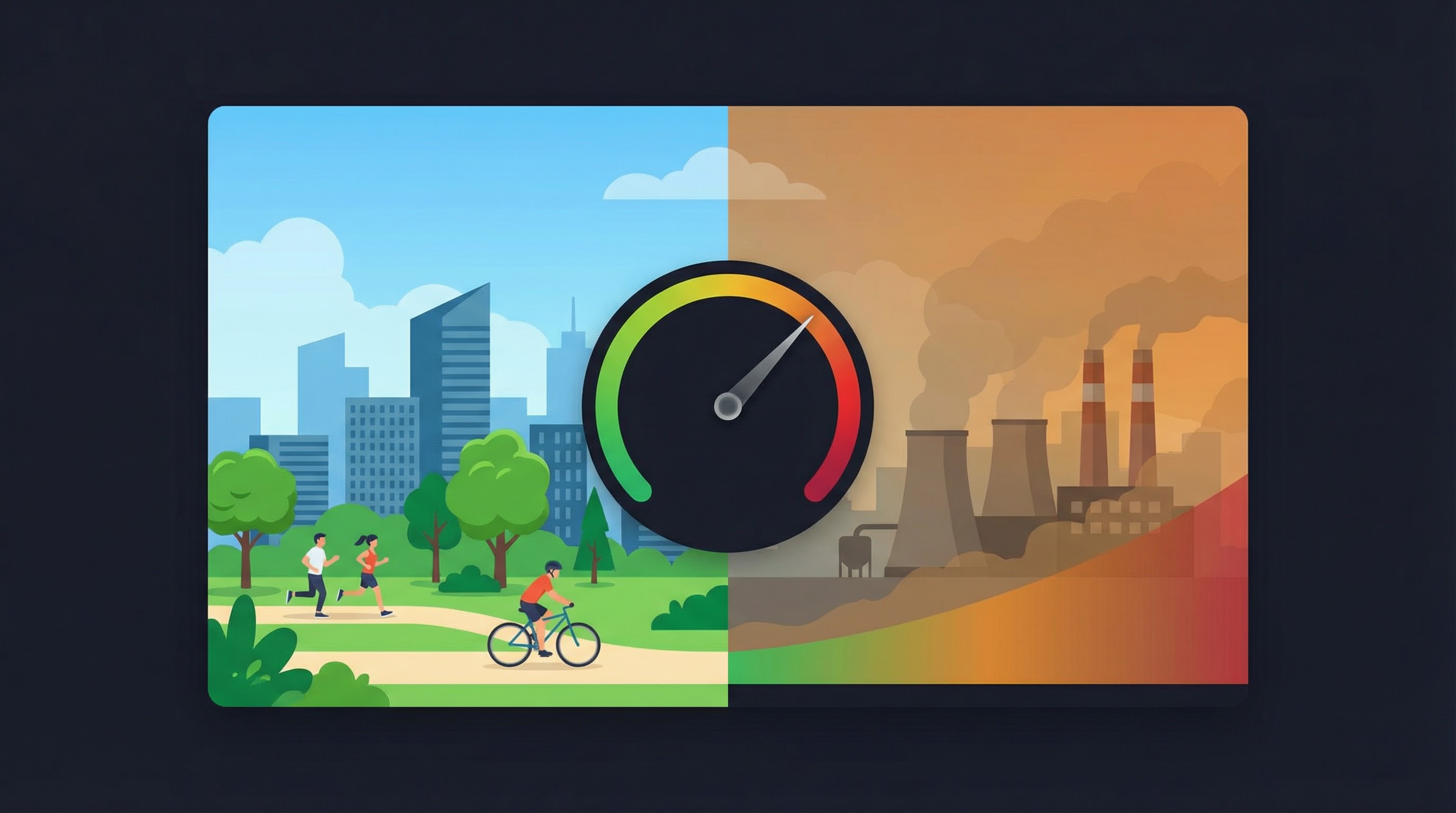
What Is the Air Quality Index (AQI)?
The Air Quality Index is a standardized scale that translates raw pollutant concentration data into a single number between 0 and 500. Developed by the U.S. Environmental Protection Agency (EPA), the AQI makes it easy for non-scientists to understand whether the air in their area is safe to breathe. Many countries have adopted similar systems, though breakpoint values may differ slightly.
The AQI is calculated individually for each of six major pollutants — PM2.5, PM10, ground-level ozone (O₃), nitrogen dioxide (NO₂), sulfur dioxide (SO₂), and carbon monoxide (CO). The overall AQI is the highest of these individual values, and the pollutant responsible is reported as the "dominant pollutant." For a detailed breakdown of AQI categories and breakpoints, see our AQI Scale reference.
The Six Major Pollutants
PM2.5 — Fine Particulate Matter
PM2.5 refers to airborne particles smaller than 2.5 micrometers in diameter — about 30 times thinner than a human hair. These particles are so small they can bypass the nose and throat and penetrate deep into the lungs, even entering the bloodstream. Sources include vehicle exhaust, industrial emissions, wildfires, and cooking smoke. Long-term exposure is linked to cardiovascular disease, respiratory illness, lung cancer, and reduced life expectancy. The WHO guideline for annual average PM2.5 is just 5 μg/m³, but many cities worldwide regularly exceed 25 μg/m³ or more.
PM10 — Coarse Particulate Matter
PM10 includes particles up to 10 micrometers — dust, pollen, mold spores, and construction debris. While these particles are too large to reach the deepest lung tissue, they still irritate the airways and can trigger asthma attacks, allergic reactions, and chronic bronchitis. PM10 levels tend to be elevated near unpaved roads, construction sites, and in arid regions prone to dust storms.
O₃ — Ground-Level Ozone
Unlike the protective ozone layer in the stratosphere, ground-level ozone is a harmful pollutant formed when nitrogen oxides (NOx) and volatile organic compounds (VOCs) react in sunlight. Ozone peaks during hot, sunny afternoons and is a major component of urban smog. Short-term exposure can cause chest pain, coughing, throat irritation, and worsened asthma. Children, the elderly, and outdoor workers are especially vulnerable. Scheduling strenuous outdoor activities for early morning or evening can significantly reduce ozone exposure.
NO₂ — Nitrogen Dioxide
A reddish-brown gas primarily produced by vehicle engines and power plants. NO₂ irritates the airways, increases susceptibility to respiratory infections, and contributes to the formation of both PM2.5 and ozone. People living near busy roads or highways experience chronically elevated NO₂ levels, which have been associated with higher rates of childhood asthma and reduced lung development.
SO₂ — Sulfur Dioxide
SO₂ is released by burning fossil fuels that contain sulfur, particularly coal and heavy fuel oil in power plants and industrial facilities. It can constrict airways within minutes of exposure, making it especially dangerous for people with asthma. SO₂ also contributes to acid rain and the formation of secondary PM2.5 particles.
CO — Carbon Monoxide
A colorless, odorless gas produced by incomplete combustion in vehicles, generators, stoves, and heating systems. CO reduces the blood's ability to carry oxygen, leading to headaches, dizziness, confusion, and at high concentrations, death. Outdoor CO levels rarely reach dangerous thresholds in well-ventilated areas, but indoor exposure from malfunctioning appliances remains a serious risk. Always ensure proper ventilation and install CO detectors.

Who Is Most at Risk?
While poor air quality affects everyone, certain populations face disproportionate health risks:
- Children: Their lungs are still developing, they breathe more air per unit of body weight, and they spend more time outdoors. Chronic exposure during childhood can permanently reduce lung capacity.
- Elderly adults: Age-related decline in respiratory and cardiovascular function makes older adults more susceptible to pollution-triggered heart attacks and strokes.
- People with respiratory conditions: Asthma, COPD, and chronic bronchitis patients can experience severe flare-ups even at "moderate" AQI levels.
- Outdoor workers: Construction workers, agricultural laborers, delivery drivers, and athletes spend extended hours outdoors, accumulating greater pollutant doses.
- Pregnant women: Studies have linked air pollution exposure during pregnancy to low birth weight, preterm birth, and developmental delays.
Health Tips for Sensitive Groups: Asthma & Allergies
At Weather World AI, we hear from many users with asthma or seasonal allergies who struggle to interpret AQI for their daily decisions. The numbers alone are not enough — here is our expert-led guidance for sensitive groups:
For People with Asthma
- We recommend checking AQI before 10:00 AM if you plan outdoor activities. Ozone builds through the day; morning air is often cleaner.
- Keep your rescue inhaler accessible when AQI exceeds 51 (Moderate). Some asthmatics react at levels others tolerate.
- Consider pre-medicating with your controller inhaler before known high-AQI days — discuss with your doctor.
- On our Dashboard, we show the dominant pollutant. If ozone is high, avoid afternoon exertion. If PM2.5 is high, morning traffic may have spiked it — wait until mid-morning.
- During wildfire smoke events, we recommend staying indoors with windows closed and HEPA filtration. N95 masks help if you must go out.
For People with Seasonal Allergies
- AQI and pollen are different — but high PM2.5 can worsen allergic inflammation. Check both. Our Global AQI Map shows real-time pollution.
- Rain temporarily clears the air of both pollen and particles. The best time for a walk is often right after a light rain.
- Windy, dry days lift pollen and dust. If AQI is moderate and you have allergies, consider an indoor workout.
- Start allergy medications 1–2 weeks before your typical season — many work better as preventives than rescue treatments.
- Shower and change clothes after outdoor exposure during high-pollen or high-AQI days to avoid bringing irritants indoors.
Evidence-Based Protection Strategies
- Monitor before you go out: Check real-time AQI on your dashboard before planning outdoor activities. If AQI exceeds 100, consider reducing exertion or moving indoors.
- Time your activities: Ozone peaks in the early afternoon. PM2.5 from traffic peaks during morning and evening rush hours. Scheduling exercise for mid-morning or after sunset can reduce exposure by 30–50%.
- Use N95/KN95 masks: When AQI is "Unhealthy" or above, properly fitted N95 or KN95 respirators filter out 95% of fine particles. Surgical and cloth masks provide minimal particle filtration.
- Improve indoor air: Keep windows closed during high-pollution periods. Use HEPA air purifiers in bedrooms and living areas. Avoid indoor pollutant sources like candles, incense, and gas stoves without ventilation.
- Create a clean-air room: During wildfire smoke events or extended high-AQI periods, designate one room with a HEPA purifier, sealed windows, and minimal door openings as a refuge.
- Avoid roadside exercise: Pollutant concentrations near busy roads can be 2–5 times higher than areas just 200 meters away. Choose parks or residential streets for running and cycling.
Long-Term Health Implications
Research consistently shows that chronic exposure to air pollution — even at levels below regulatory standards — increases the risk of heart disease, stroke, lung cancer, diabetes, and neurodegenerative diseases like Alzheimer's. A landmark 2020 study published in the New England Journal of Medicine found that every 10 μg/m³ increase in long-term PM2.5 exposure was associated with a 7.3% increase in all-cause mortality. This means that reducing your daily exposure, even by modest amounts, has measurable health benefits over time.
Check your air quality now
Visit the Dashboard for real-time AQI, or explore the City Rankings to compare air quality worldwide.
Weather World AI Editorial Team
This article was written and reviewed by our core team of meteorology enthusiasts and environmental health researchers. We rely on open, government-backed data sources (like NOAA and ECMWF) and adhere to strict editorial standards to ensure our weather, climate, and air quality information is accurate, up-to-date, and actionable.