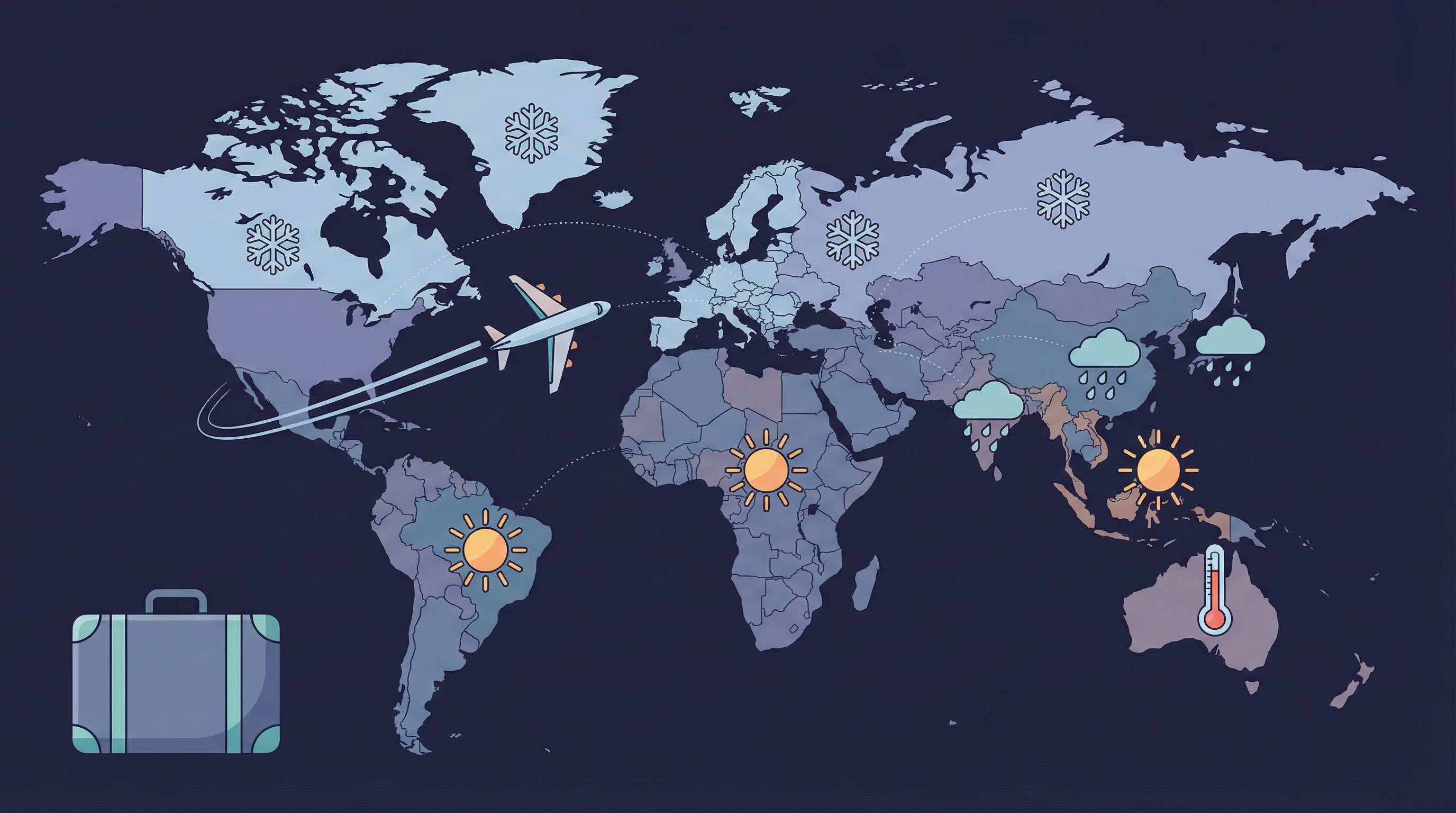
Best Weather Month by City — When to Visit
At Weather World AI, we track conditions worldwide. Here is our "Best Weather Month" table for five popular destinations — the kind of actionable data that helps you book with confidence. These are based on typical temperature, rainfall, and comfort; check our Dashboard for real-time forecasts before you travel.
| City | Best Month | Why | Avoid |
|---|---|---|---|
| Tokyo | October–November | Mild (15–20°C), low rain, clear skies. Cherry blossom (March–April) is crowded but stunning. | June–July (rainy season), August (hot & humid) |
| Paris | May, September | Pleasant 18–23°C, fewer tourists than summer. Long daylight hours. | August (many closures, can be hot), November–February (cold, short days) |
| Barcelona | April–May, September–October | Warm (20–25°C), beach-ready without peak summer crowds. Lower AQI than winter. | July–August (crowded, hot, high UV), winter (cool, some rain) |
| New York | April–May, September–October | Mild 15–22°C, crisp air. Fall foliage in October. Spring blooms in April. | January–February (cold, snow), July–August (hot, humid, high ozone) |
| Sydney | September–November, March–May | Spring/autumn: 18–24°C, comfortable. Avoids summer heat and winter chill. | December–February (hot, bushfire risk, UV extreme), June–August (cool, rainy) |
Always verify current conditions. Climate patterns (El Niño, La Niña) can shift typical weather. Check AQI before booking — cities like Delhi, Beijing, and Bangkok have seasonal pollution spikes.
Researching Your Destination's Weather
The first step is understanding what weather to expect. Climate averages tell you the typical range, but real conditions can deviate significantly — especially during ENSO events, unusual weather patterns, or transitional seasons. Here is a systematic research approach:
- Check historical averages: Look at average high/low temperatures, rainfall, and humidity for your travel dates. This gives you a baseline.
- Check the current forecast: As your trip approaches, use the 10-day forecast on Weather World AI to get precise predictions. Search for your destination city.
- Check AQI at your destination: Some popular destinations (e.g., Delhi, Beijing, Cairo, Bangkok during burning season) can have dangerous air quality. Visit our rankings page to check before booking.
- Account for microclimates: Coastal areas are milder than inland areas at the same latitude. Mountains are cooler. Desert temperatures swing dramatically between day and night.
- Check seasonal hazards: Is it hurricane season? Monsoon season? Wildfire season? These do not just affect weather — they can disrupt flights, close roads, and affect air quality.
Packing for Variable Climates
The key to smart travel packing is versatility. Rather than packing for one specific condition, build a layered wardrobe that covers a range of temperatures and scenarios. The layering system — base layer, insulating layer, shell — works in almost every climate.
Hot and Humid Destinations
- Pack lightweight, breathable, moisture-wicking fabrics (linen, merino wool, technical synthetics). Cotton absorbs moisture and stays damp.
- Bring a broad-spectrum SPF 50 sunscreen, a wide-brimmed hat, and UV-blocking sunglasses.
- Pack a compact rain jacket or poncho — tropical destinations often have brief, intense rain showers. Quick-dry clothing is essential.
- Light-colored clothing reflects heat better than dark colors.
Cold Destinations
- Merino wool base layers regulate temperature and resist odor — ideal for multi-day trips.
- A packable down jacket provides excellent warmth-to-weight ratio for the insulating layer.
- Waterproof, windproof outer shell is essential — cold and wet is far more dangerous than cold and dry.
- Don't forget warm accessories: gloves, scarf, and a beanie. Up to 10% of body heat is lost through the head in cold conditions.
Mixed or Unpredictable Climates
- The layering approach shines here. Pack items that mix and match rather than heavy, single-purpose garments.
- A versatile rain jacket that doubles as a windbreaker covers many scenarios.
- Convertible pants (zip-off legs) offer flexibility for variable conditions on hiking trips.
- Always pack one warm layer more than you think you need — unexpected cold fronts, air-conditioned buildings, and high-altitude side trips can catch you off guard.

Altitude and Acclimatization
Traveling to high-altitude destinations (above 2,500 meters / 8,200 feet) — such as Cusco, Lhasa, La Paz, Quito, or Colorado ski resorts — requires awareness of altitude sickness. As altitude increases, air pressure drops and oxygen levels decrease. Symptoms of acute mountain sickness (AMS) include headache, nausea, fatigue, and shortness of breath, typically appearing 6–12 hours after arrival.
- Ascend gradually if possible — spending a night at an intermediate altitude before reaching your destination dramatically reduces AMS risk.
- Stay hydrated. Dehydration is common at altitude due to lower humidity and increased respiration.
- Avoid alcohol and heavy meals for the first 24–48 hours at altitude.
- If symptoms worsen (confusion, inability to walk straight, severe headache), descend immediately — high-altitude pulmonary or cerebral edema can be fatal.
Jet Lag and Weather Sensitivity
Crossing time zones disrupts your circadian rhythm, making you more sensitive to environmental stressors including temperature extremes and UV exposure. After a long flight, your body's thermoregulation may be temporarily impaired, and your immune system is slightly suppressed.
- Allow recovery time before engaging in strenuous outdoor activities — especially in extreme heat, cold, or at altitude.
- Get natural light exposure at your destination's daytime hours to reset your internal clock faster.
- Stay extra hydrated — air travel dehydrates you, compounding the effects of jet lag and making you more vulnerable to heat illness.
Emergency Preparedness While Traveling
Weather emergencies can occur anywhere. Having a basic preparedness mindset while traveling reduces risk significantly.
- Register with your country's embassy or consulate at your destination for emergency alerts.
- Know local emergency numbers (they vary by country).
- Keep digital copies of important documents (passport, insurance, prescriptions) in cloud storage accessible from any device.
- If traveling during storm season, purchase trip insurance that covers weather-related cancellations and have flexible booking arrangements.
- Download offline maps and weather data for areas with limited connectivity.
Research your destination
Search for any city on the Dashboard to see its current weather, 10-day forecast, and air quality — everything you need to plan a well-prepared trip.
Weather World AI Editorial Team
This article was written and reviewed by our core team of meteorology enthusiasts and environmental health researchers. We rely on open, government-backed data sources (like NOAA and ECMWF) and adhere to strict editorial standards to ensure our weather, climate, and air quality information is accurate, up-to-date, and actionable.