The Three-Check Approach
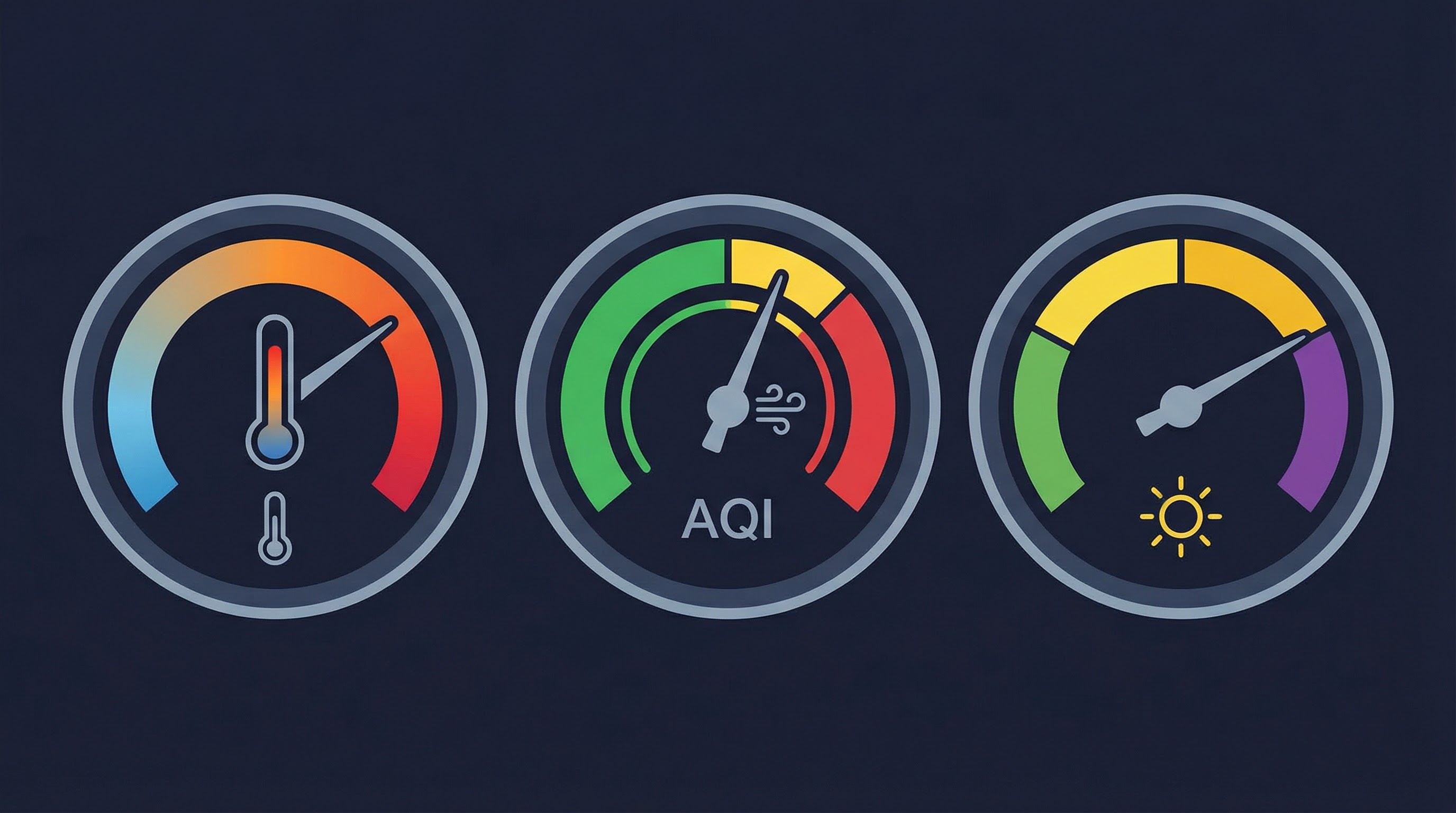
Before any outdoor activity, perform three quick checks: temperature and feels-like, AQI, and UV index. Together, these give you a comprehensive picture of whether conditions are safe and comfortable. Weather World AI's dashboard shows all three for your exact location, so you can make informed decisions in seconds.
Temperature
Feels-like 10–26°C (50–79°F)
Below 0°C or above 32°C — take precautions
AQI
0–50 (Good)
Above 100 — reduce exertion outdoors
UV Index
0–2 (Low)
Above 6 — sun protection essential
Running and Jogging
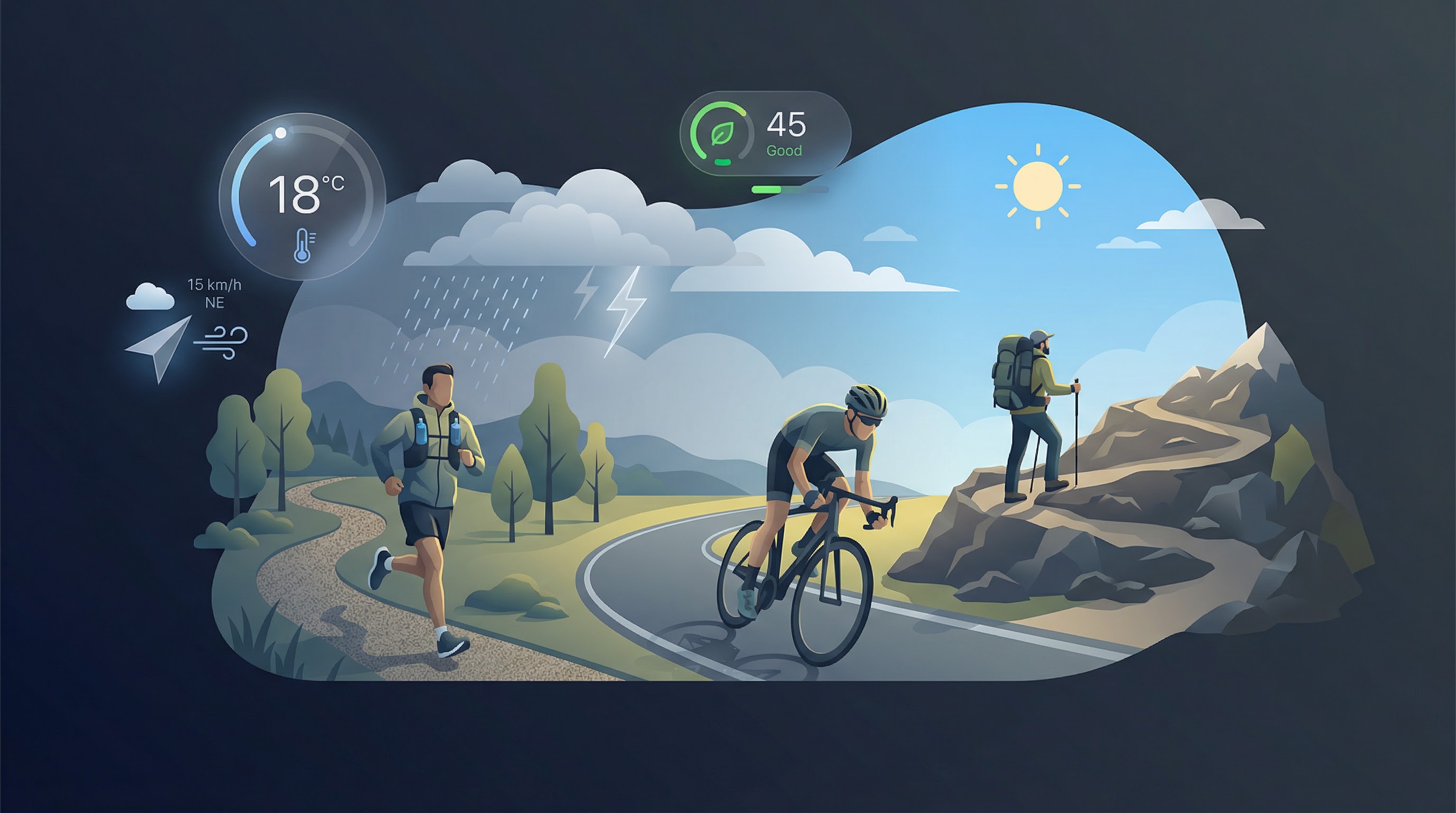
Running is one of the most weather-sensitive activities because heavy breathing draws more air — and any pollutants in it — deep into the lungs. During a moderate jog, you inhale about 6–10 times more air per minute than at rest, dramatically increasing pollutant exposure.
- Ideal conditions: 10–15°C (50–59°F), AQI below 50, UV below 3 (early morning or evening).
- Avoid running within 50 meters of busy roads — NO₂ and PM2.5 concentrations drop sharply with distance from traffic.
- In hot weather, reduce pace by 10–20% and hydrate before, during, and after. Start earlier (before 8 a.m.) to avoid peak heat and ozone.
- In cold weather, cover your mouth with a buff or scarf to warm and humidify inhaled air, reducing airway irritation.
- If AQI exceeds 100, move your workout indoors. Even a treadmill session is better for your lungs than running in polluted air.
Hiking and Trekking
Hiking involves longer exposure windows and variable conditions as you gain or lose elevation. Temperature drops approximately 6.5°C per 1,000 meters (3.5°F per 1,000 feet) of altitude gain, and wind speeds often increase significantly at ridgelines and summits.
- Check the hourly forecast — not just the daily summary. Afternoon thunderstorms are common in mountainous terrain during warm months. Plan to be below treeline by noon if storms are likely.
- UV intensity increases approximately 10% per 1,000 meters of altitude. Apply sunscreen generously and wear UV-blocking sunglasses to prevent snow blindness at higher elevations.
- Dress in layers you can add or remove. Conditions at the trailhead may differ drastically from the summit.
- Carry more water than you think you need — dehydration occurs faster at altitude due to lower humidity and increased respiration rate.
Cycling
Cyclists face unique weather challenges: wind directly impacts performance and safety, wet roads increase braking distance and crash risk, and cyclists often ride alongside traffic where pollutant concentrations are highest.
- Headwinds above 30 km/h (19 mph) significantly increase effort and reduce safety. Check wind direction relative to your planned route.
- Wet roads reduce tire grip. Reduce speed on turns, increase following distance, and avoid painted road markings and metal surfaces (manhole covers, grates) which become extremely slippery.
- Choose routes through parks or residential areas rather than main roads to reduce pollution exposure. Bike paths separated from traffic are ideal.
- In cold weather, wind chill is amplified by cycling speed. At 25 km/h in 5°C air, effective wind chill drops to about -1°C.
Gardening and Yard Work
Gardening may seem low-risk, but prolonged outdoor exposure during hot weather, high UV, or poor air quality can catch people off guard — especially because gardeners often lose track of time.
- Garden in the early morning (before 10 a.m.) or late afternoon (after 4 p.m.) during summer to avoid peak heat and UV.
- Wear a wide-brimmed hat, long sleeves, and sunscreen. Skin cancer risk increases with cumulative UV exposure over a lifetime.
- Take regular water breaks — at least every 20 minutes in hot weather, even if you do not feel thirsty.
- Check AQI before mowing or doing heavy yard work, as these activities increase your breathing rate. Avoid yard work during poor air quality days.
Events and Outdoor Gatherings
Planning a barbecue, outdoor wedding, sports event, or festival? Weather awareness can make or break the event. Use the 10-day forecast for initial planning, then refine with hourly data as the event approaches.
- Have an indoor backup plan for any outdoor event. Even a 20% rain chance means there is a real possibility of precipitation.
- For summer events, provide shade structures, cooling stations, and ample water. Monitor heat index throughout the day.
- Wind above 40 km/h (25 mph) makes tents, inflatables, and decorations unsafe. Check wind forecasts carefully.
- For evening events, check sunset time and temperature drop. Fall and spring evenings can cool rapidly after sunset.
Plan your next outing
Check current conditions and the hourly forecast on your Weather Dashboard, then verify air quality on the AQI Map.
Weather World AI Editorial Team
This article was written and reviewed by our core team of meteorology enthusiasts and environmental health researchers. We rely on open, government-backed data sources (like NOAA and ECMWF) and adhere to strict editorial standards to ensure our weather, climate, and air quality information is accurate, up-to-date, and actionable.